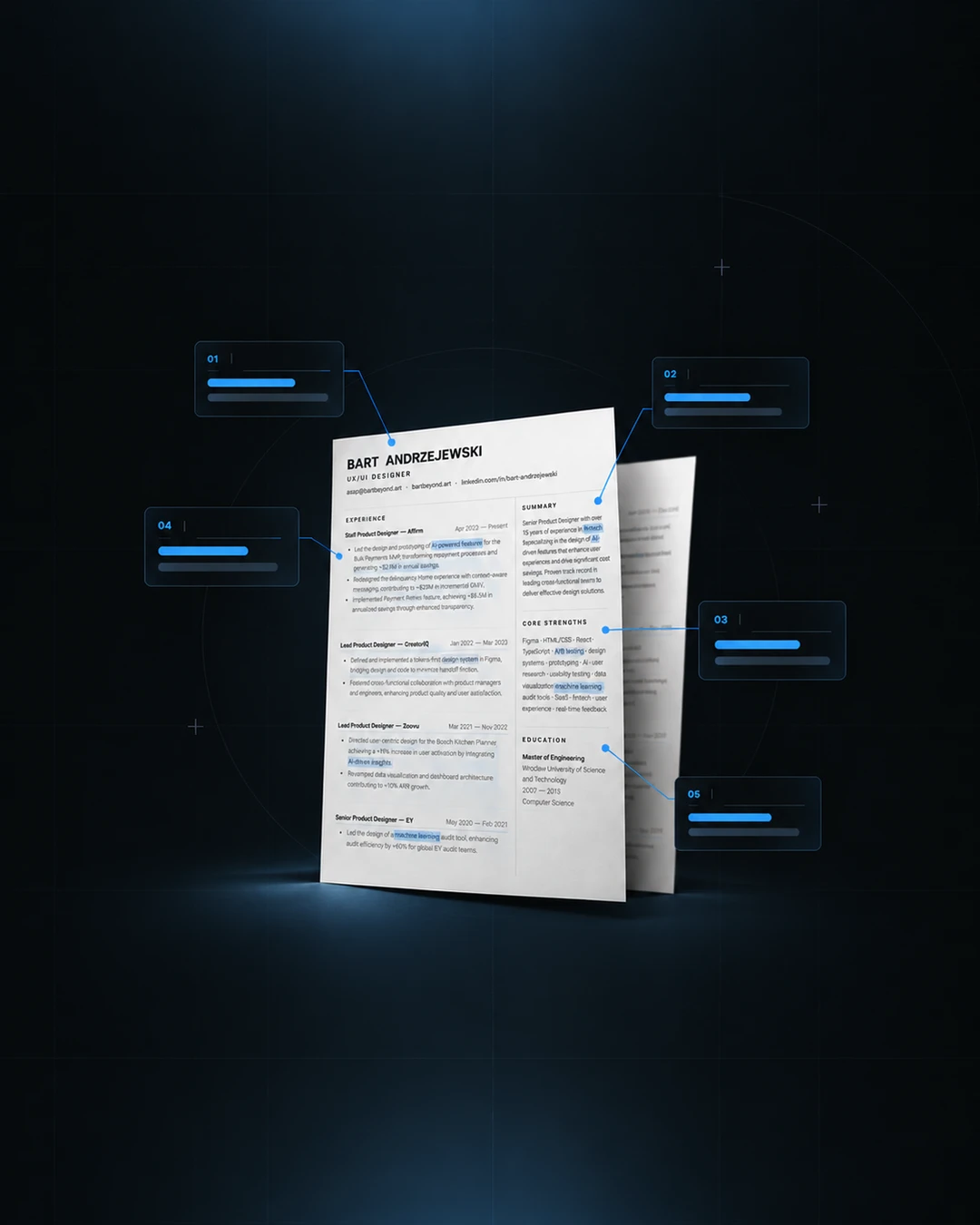
+45%
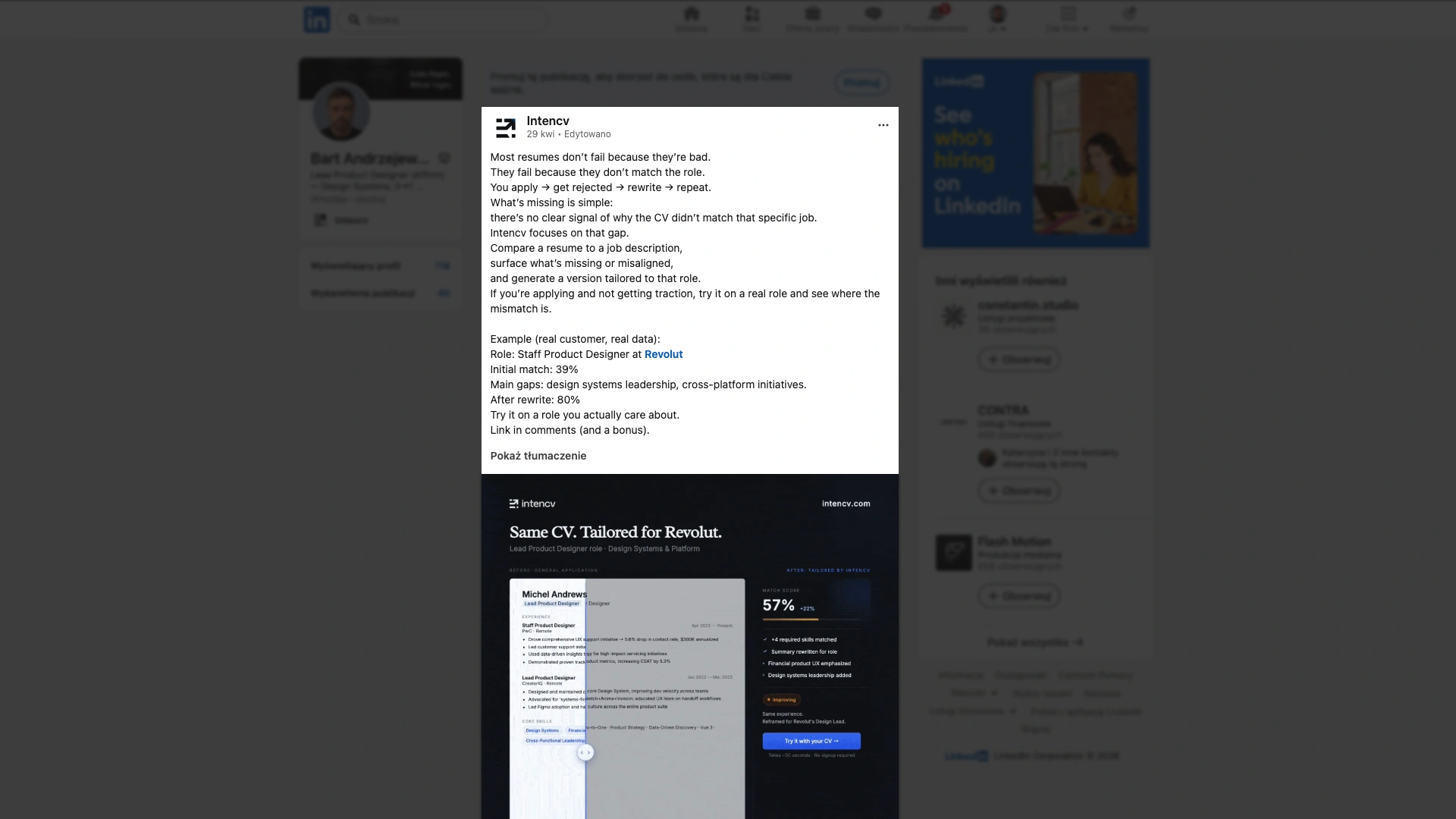
Composite match on one documented Revolut Product Designer application. 35% on the generic CV, 80% after tailored output (+45 points). Single application, not a cohort average.
The real problem wasn't writing résumés. It was applying without knowing whether your CV actually matched the role.
TL;DR
Time to ship
1 week
Idea to live product
Ownership
SOLO
Product, design & engineering
Systems shipped
4
One connected product ecosystem
Composite score
+45 pts
35% → 80% on one application
+45%
Match-score lift
35 → 80 composite · documented Revolut Product Designer application
4
Systems shipped
Core product, LinkedIn tool, SEO engine, distribution pipeline
20+
Indexed SEO routes
~30 lines of config per page
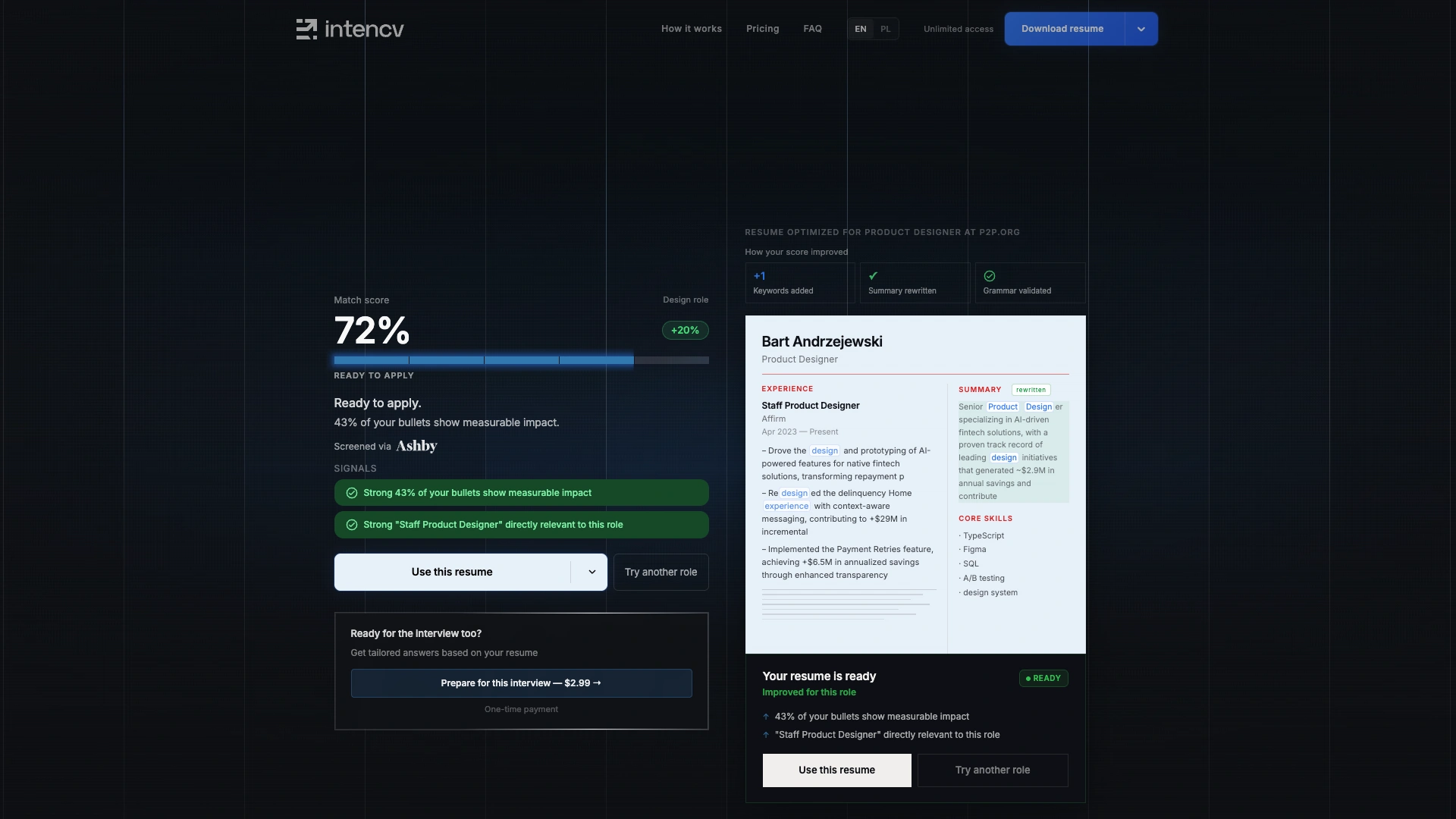
Most résumé tools generate first and ask questions later. Intencv checks a CV against the actual job posting before AI runs and before payment. The repeatable score becomes the rewrite target, the reason someone can judge value, and the constraint that shaped scoring, paywall, generation, and PDF delivery.
Summary
01
Typical flow: generate, then show a percentage that doesn’t steer anything. When I scored the same CV with an LLM three times, I got 67%, 71%, and 64%. Fine for a vibe check, useless as a reason to pay.
The score couldn’t be decorative. If it wobbled, it couldn’t justify payment or tell the rewriter what to fix. A stable, pre-generation read against the live posting gave both: a paywall users could evaluate and a target the model had to hit.
01
Generic CV composite
35%
Tailored output composite
80%
+45pts
Directional pillar movement; composite total is the shipped system output.
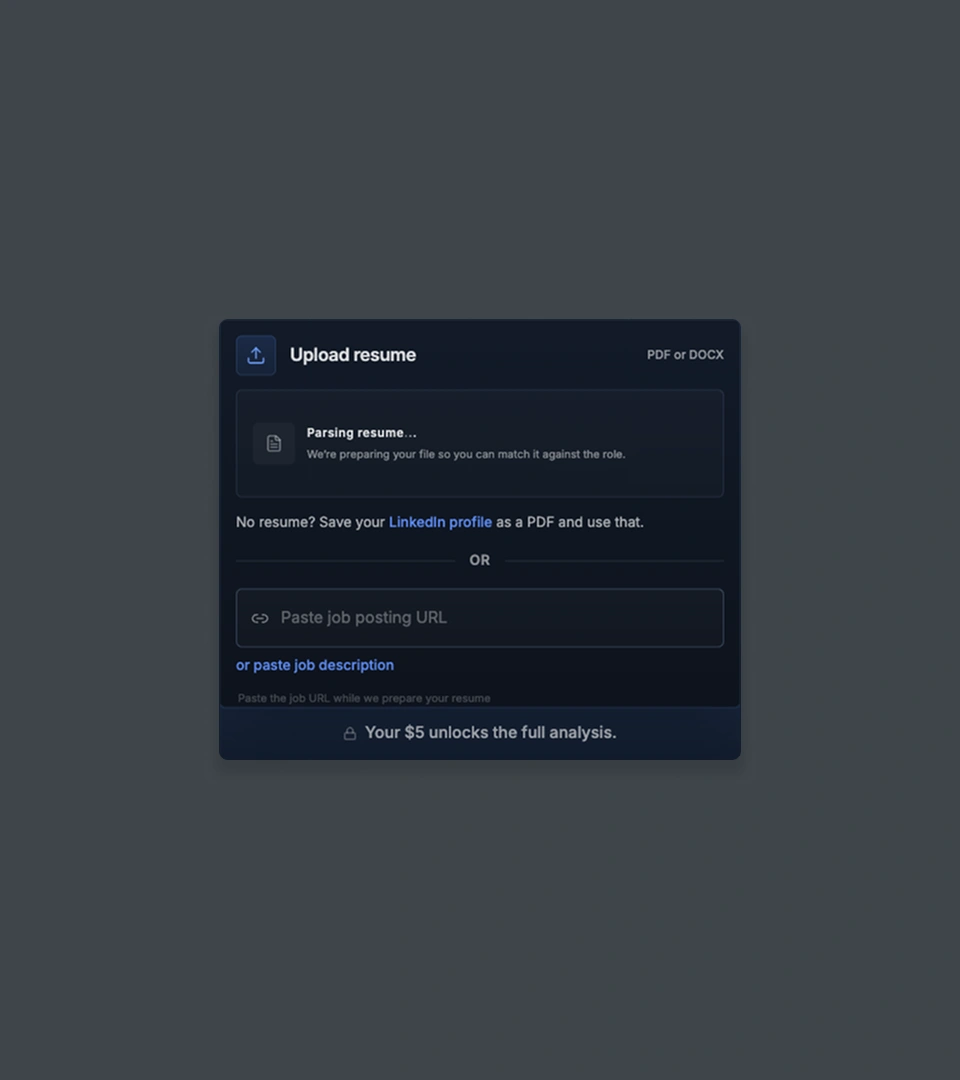
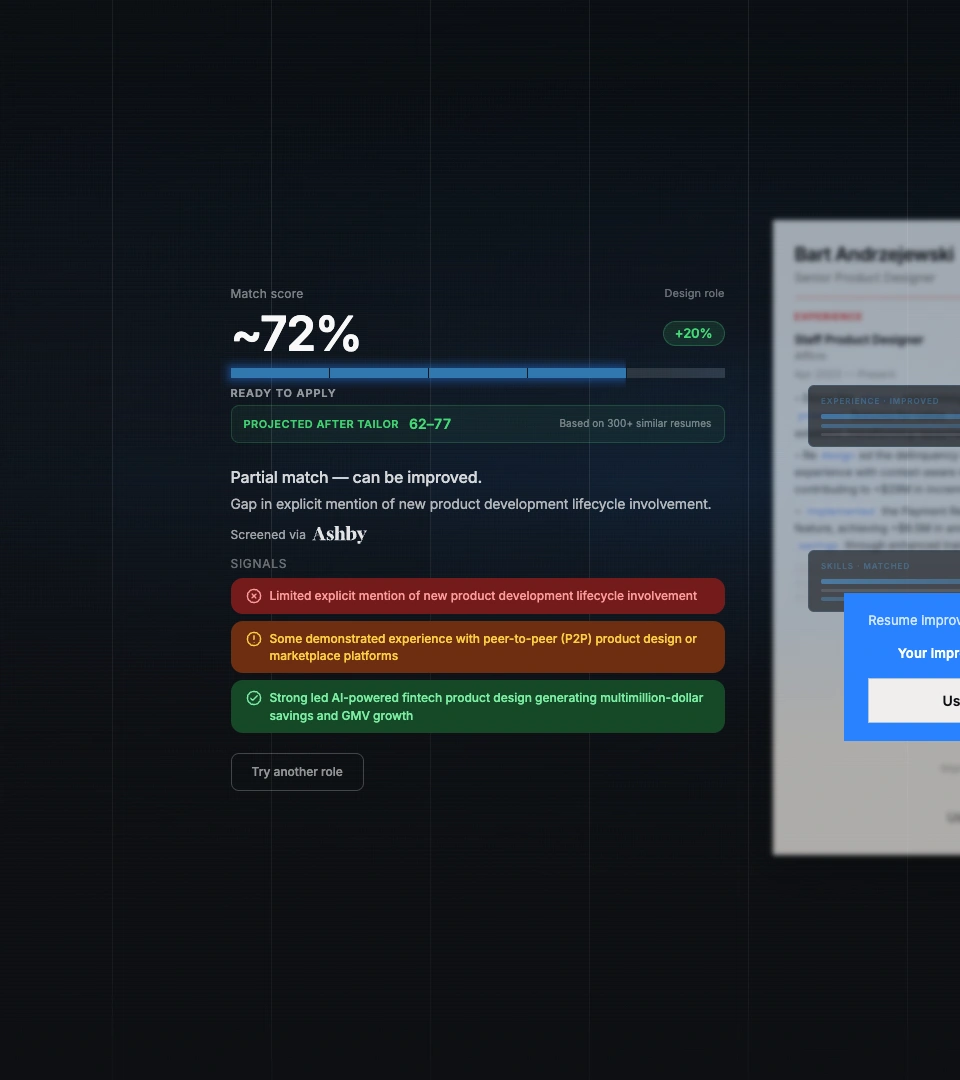
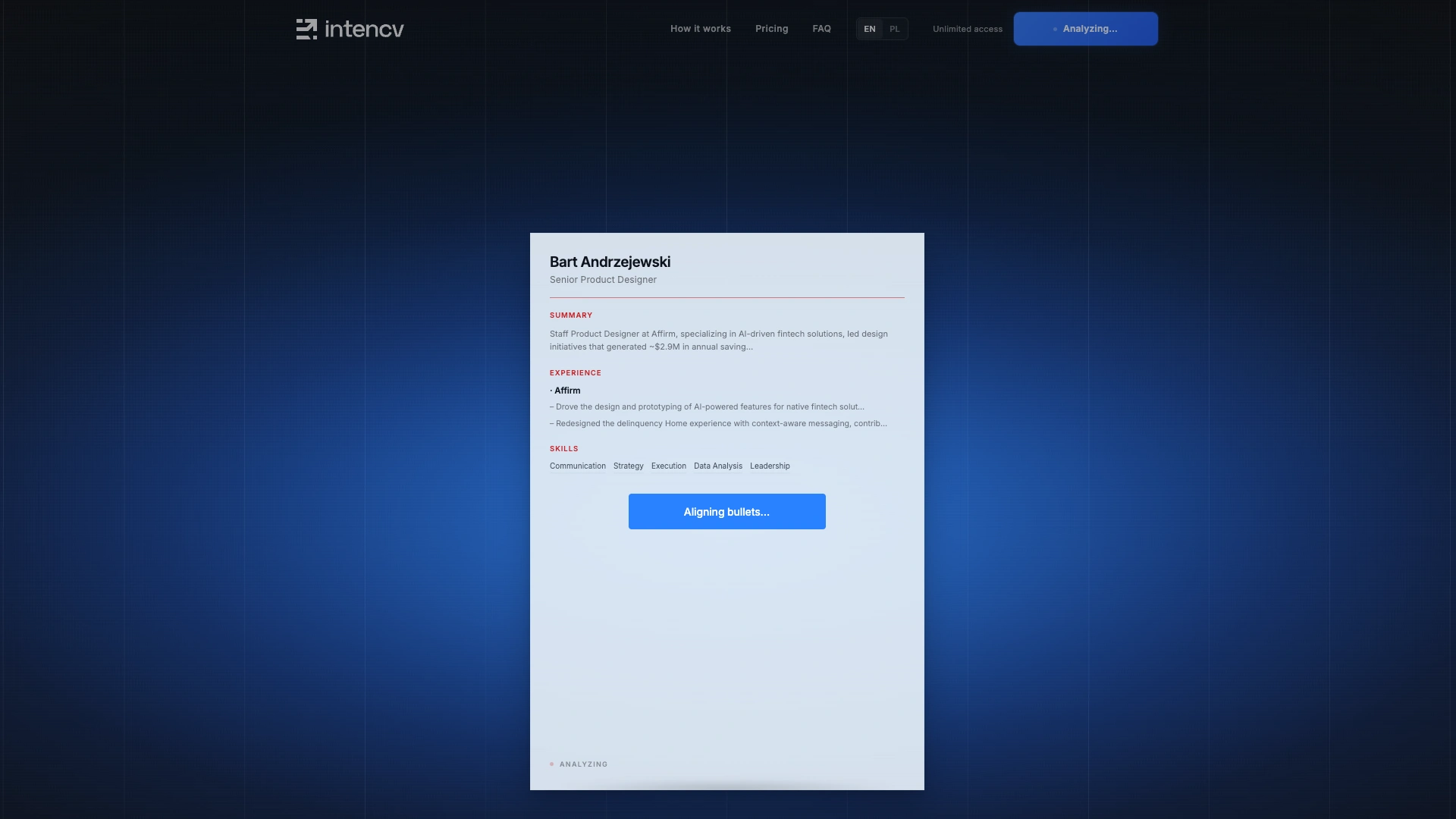
02
Score before paywall
Deterministic scoring over LLM scoring
No account to start
Merge AI output onto the base CV
Server-rendered PDF via Browserless
Score before paywall — users see a concrete reason to pay first. Some people with low scores leave; I don’t treat every drop-off as healthy, but charging before a number is worse.
Deterministic scoring over LLM scoring — repeatability matters when payment hangs on the read. Trade-off: rule-based matching can miss semantic equivalents a model might catch.
No account to start — upload and score before signup. Less friction up front; more abuse surface to handle later.
Merge AI output onto the base CV — a bad suggestion can’t replace the whole document. Trade-off: less freedom to restructure the original layout.
Server-rendered PDF via Browserless — the file is the product; client render varies by device. ~2–4s latency and higher per-use render cost, traded for consistent output.

03
03
Score-first pipeline. Deterministic scoring runs before any LLM rewrite or payment.
1
2
3
4
5
6
7
8
CV and job URL, SSRF-protected fetch, free deterministic 4-pillar score, optional learning context, constrained gpt-4o-mini rewrite, merge onto the original CV, Browserless PDF, then score validation and optional stretch pass.
01
02
03
Real CVs break clean extraction. Client parse first, server dual-library retry when layout corrupts, vision OCR when text fails. Roughly 10% of uploads I saw needed fallback for coordinate layouts. Observed sample, not an industry statistic.
Beyond the core product: admin LinkedIn post canvas (/linked), programmatic SEO template (20+ routes, ~30 lines of config per page), and a Reddit/Quora distribution pipeline (scrape, dedupe, rules, AI quality gate, human review, no auto-posting).
Stack: React, Node.js, OpenAI, Stripe, Redis, Vercel. Entry tier $9/application. Margin driven more by PDF rendering than model tokens.
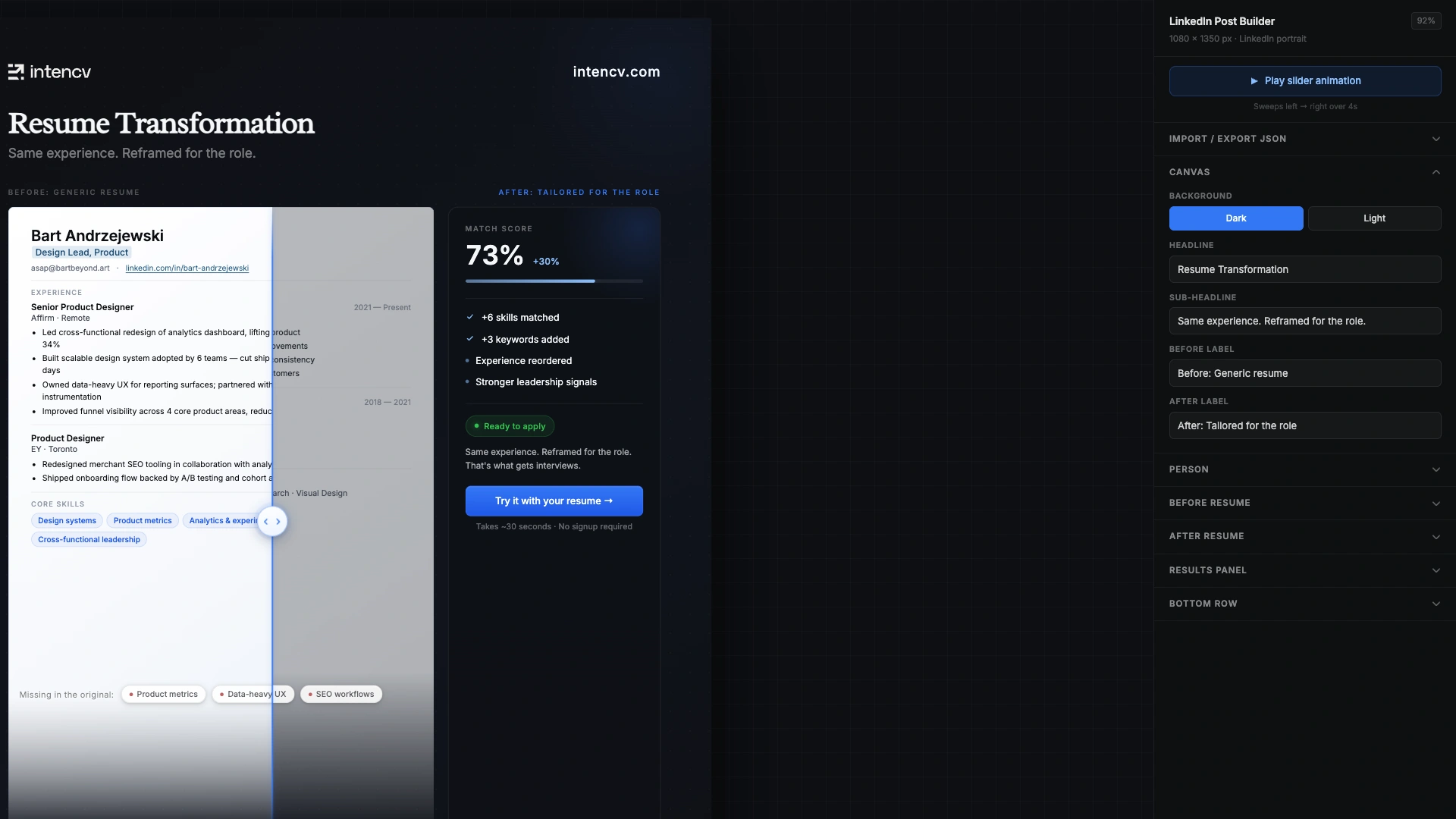
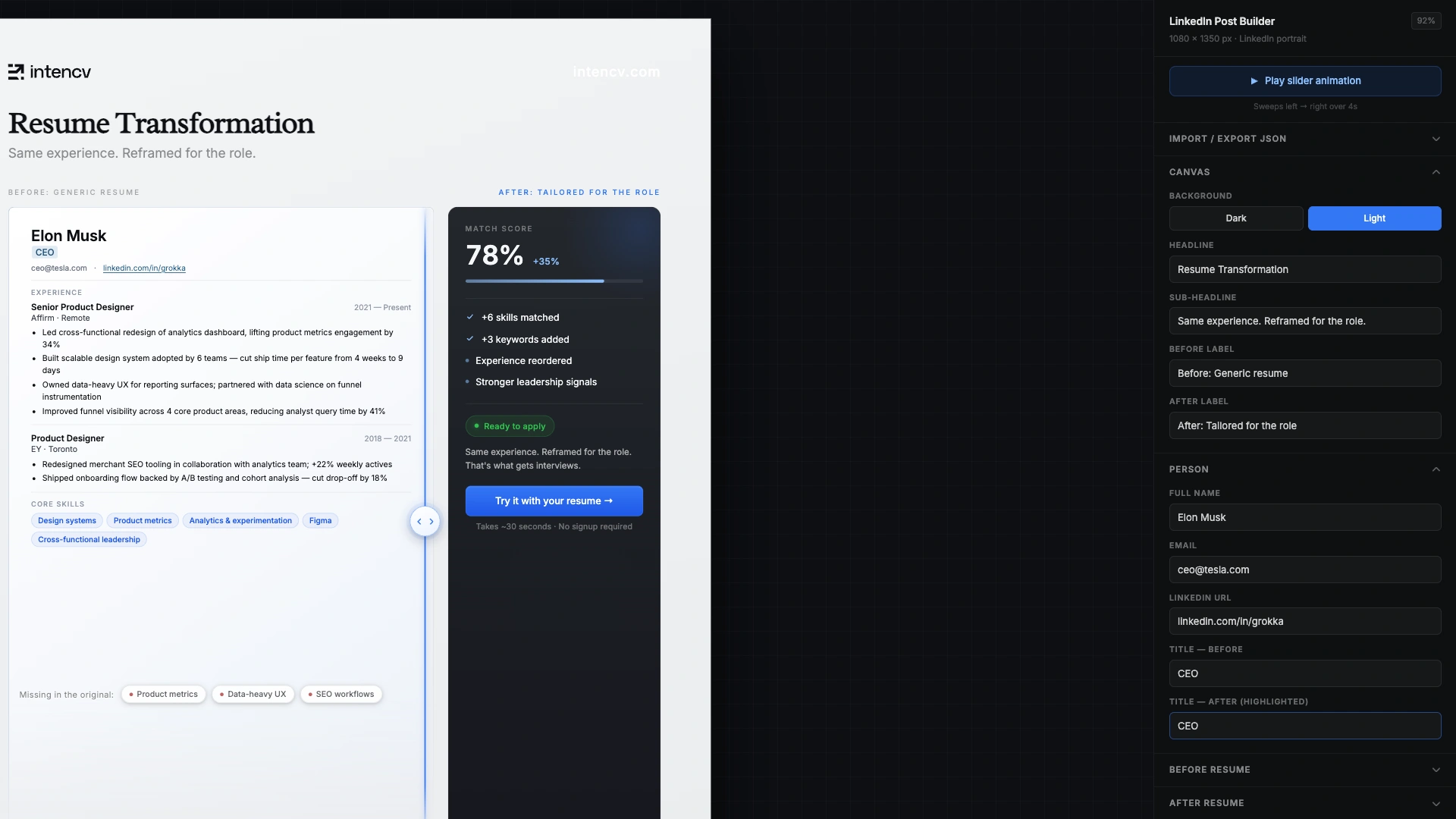
Intencv — LinkedIn resume transformation canvas, dark theme. Alternates with: Intencv — LinkedIn resume transformation canvas, light theme
Proof
+45%
Composite match on one documented Revolut Product Designer application. 35% on the generic CV, 80% after tailored output (+45 points). Single application, not a cohort average.
~65%
Approximate funnel: uploads that reach a viewed score before pay (~65%). Observed shape, not proof that the score lift drove conversion.
4
Systems shipped on one stack: core product, LinkedIn admin canvas, programmatic SEO, distribution pipeline with human review.
04
Observed product funnel — not evidence that match-score lift caused conversion or hiring outcomes.
Systems shipped: four products on one stack (core, LinkedIn tool, SEO engine, distribution pipeline); 20+ indexed SEO routes from one template (~30 lines of config per page).
Documented Revolut Product Designer application in Proof above. Tailored output on file, not a hiring result.
Observed funnel (approximate): ~100% CV uploaded → ~65% score viewed → ~20% paid. Shapes how people move through the product; not evidence that the score lift caused hires.
Systems shipped: four products on one stack (core, LinkedIn tool, SEO engine, distribution pipeline); 20+ indexed SEO routes from one template (~30 lines of config per page).
Evidence
01
Score before paywall
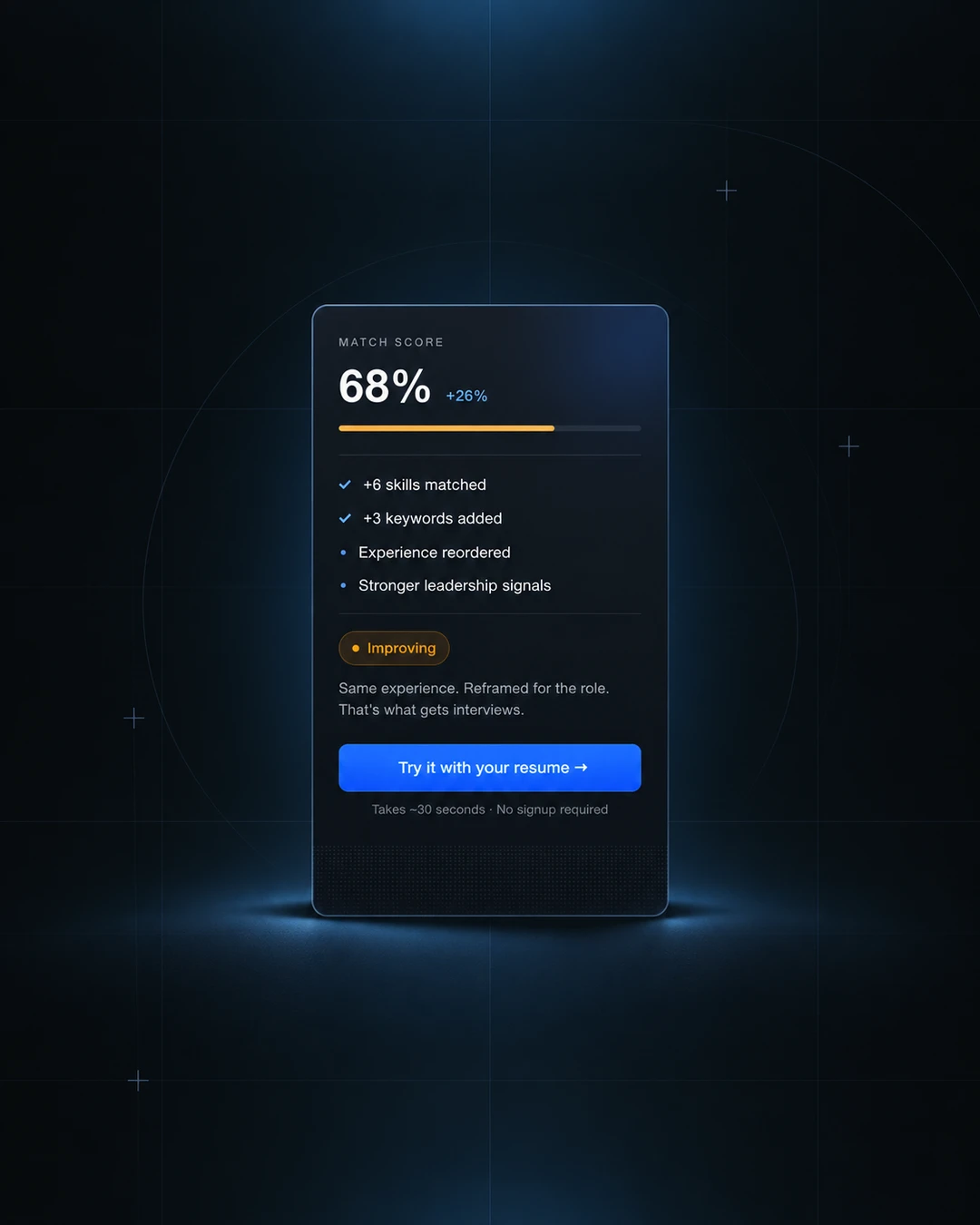
Free deterministic 4-pillar score against the live job URL. Generation and payment only after the user sees an auditable read on fit.
02
Deterministic over LLM scoring
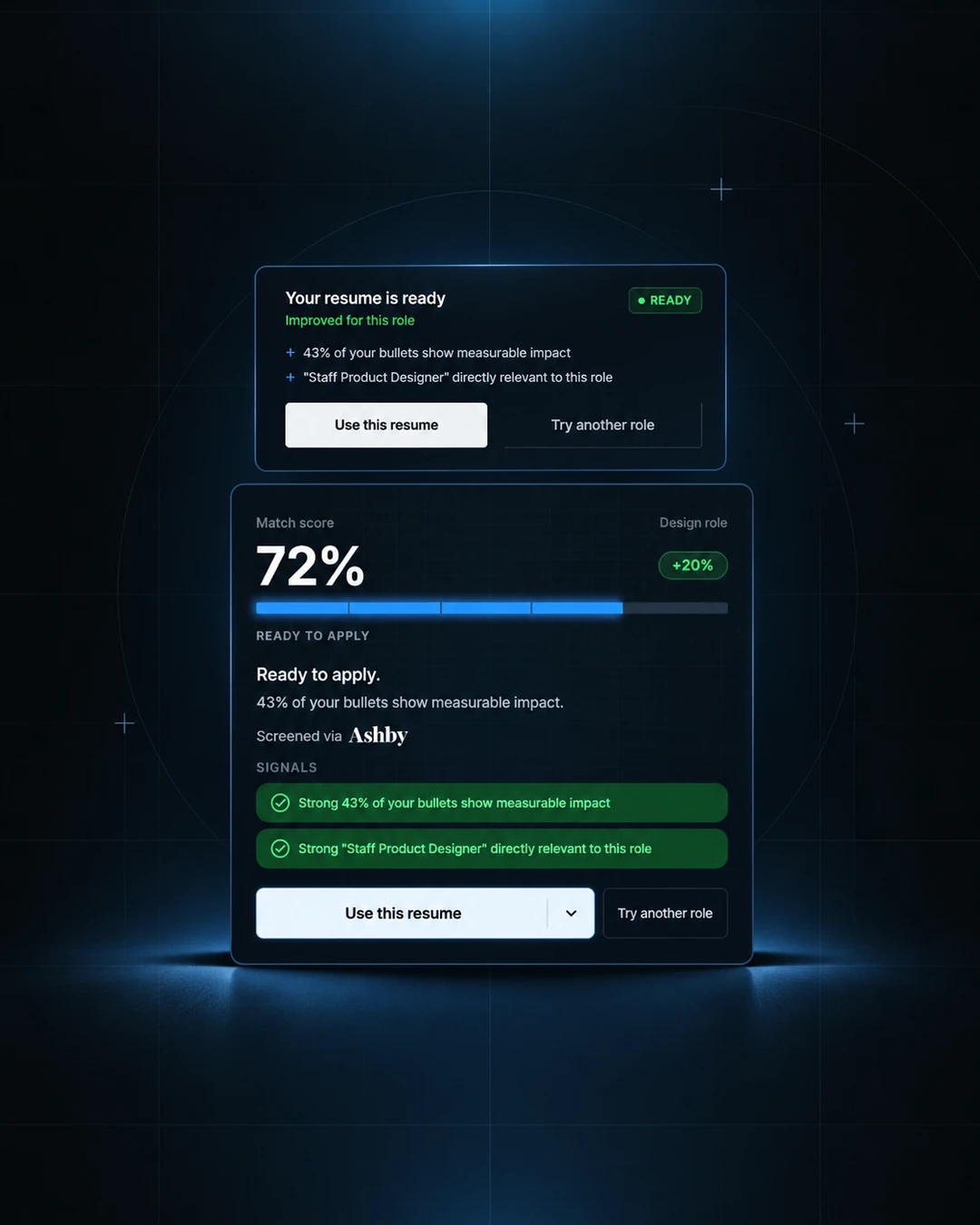
Same CV returned 67%, 71%, and 64% across three LLM scoring calls. Unusable as a paywall signal. Pillar math is stable run to run.
03
Deliverable is the PDF
Server-rendered PDF via Browserless. Client-side render varies by device; the résumé file is the product outcome, not the UI chrome.